
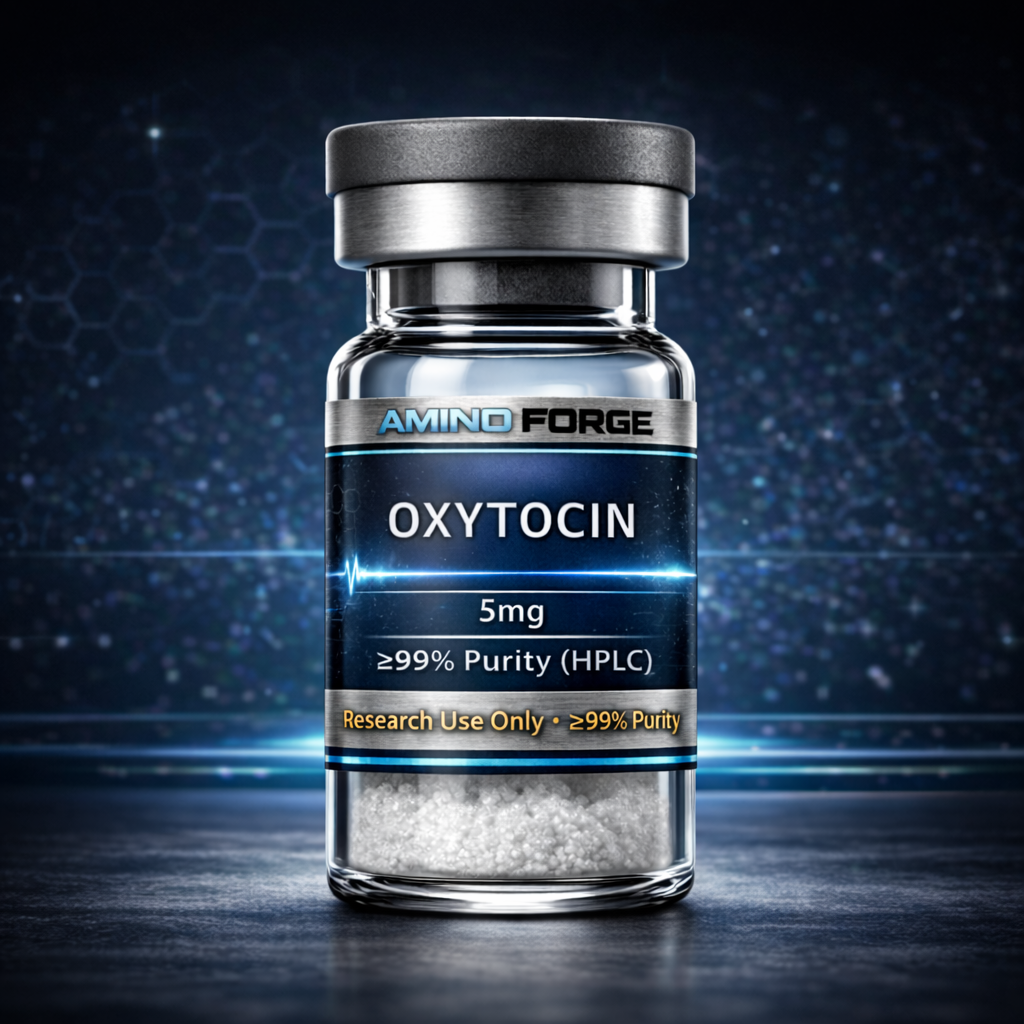
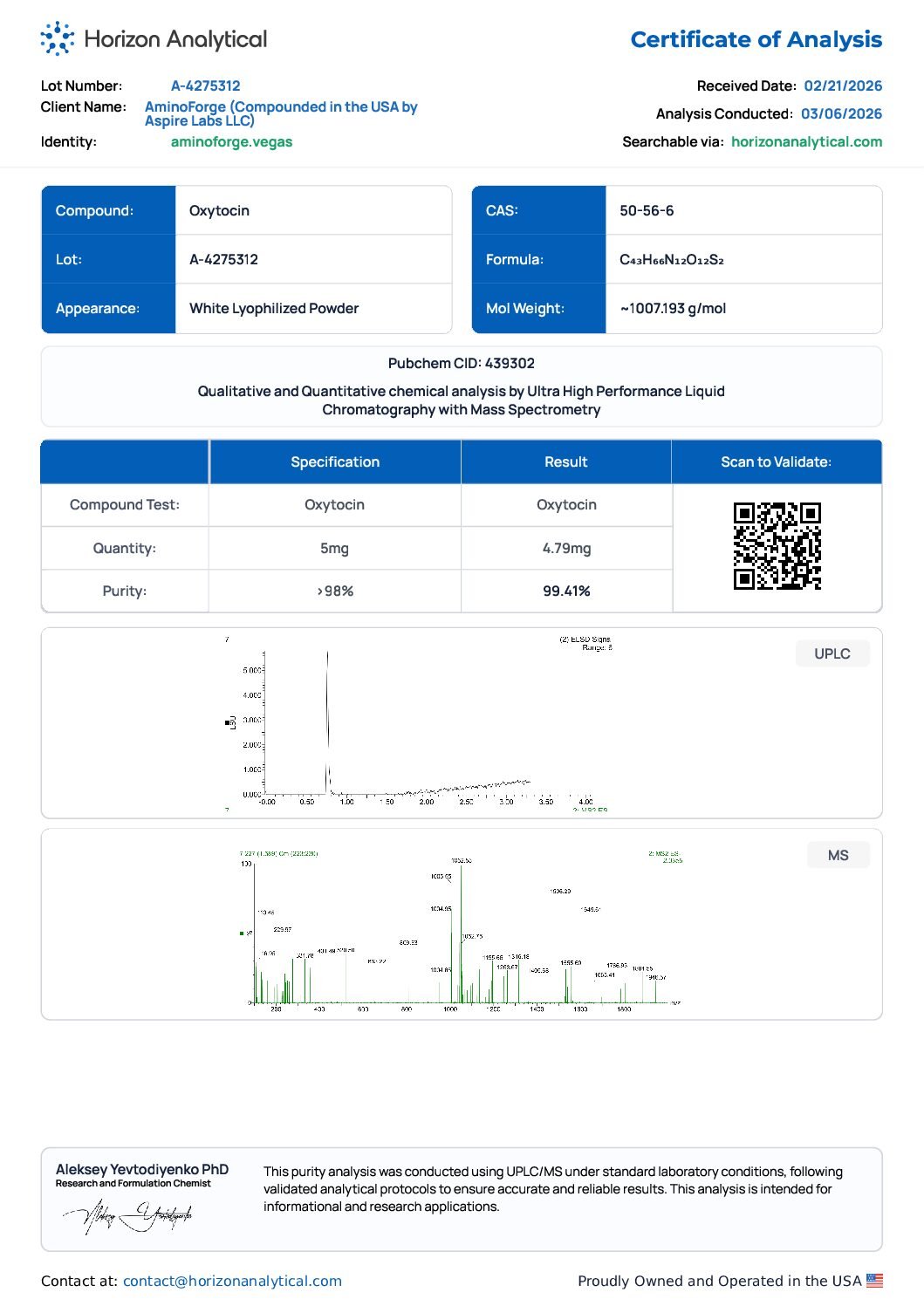
Oxytocin is a naturally occurring hypothalamic nonapeptide with the sequence Cys-Tyr-Ile-Gln-Asn-Cys-Pro-Leu-Gly-NH2 and a molecular weight of approximately 1,007.2 Da, synthesized in the paraventricular and supraoptic nuclei of the hypothalamus and released both into the peripheral circulation via the posterior pituitary and directly into the brain via axonal projections — making it a uniquely dual-function neuropeptide with both endocrine and neuromodulatory research applications.
Originally studied for its peripheral roles in parturition and lactation, oxytocin has been extensively investigated for its central effects on social behavior, stress response, and autonomic regulation — with CNS oxytocin receptor activation in the amygdala, hippocampus, and prefrontal cortex mediating effects on social recognition, anxiety-related behavior, fear extinction, and hypothalamic-pituitary-adrenal (HPA) axis modulation in preclinical models, positioning it as one of the most extensively studied neuropeptides in behavioral neuroscience.
Research has focused on oxytocin’s role in social cognition neuroscience, stress and anxiety circuit modulation, and neuroendocrine regulation — with its well-characterized receptor pharmacology and broad CNS distribution making it a foundational research tool for investigating peptidergic neuromodulation alongside compounds such as Selank (anxiolytic GABAergic mechanisms), Semax (neurotrophic factor modulation), and VIP (neuropeptide autonomic signaling). For further reading see: Oxytocin social behavior and neuroendocrine research (PubMed).
Specifications:
- Purity: ≥99% (HPLC verified)
- Form: Lyophilized powder
- Storage: −20°C
For Research Use Only.





Reviews
There are no reviews yet.